
The Importance of Practicing Safe Hygiene as a Food Industry Worker
Written by Staff Writer

Foodborne illnesses send millions of people to the hospital every year. Most of those cases are preventable. Whether you manage a restaurant, run a pop-up operation or operate a licensed catering business from home, understanding and applying safe, hygienic practices can help you protect the people you feed.
This guide explains the fundamentals of hygiene, explores the four pillars of food safety and provides seven essential hygiene tips that every industry worker should follow.
Food Hygiene vs. Food Safety: What’s the Difference?
Although the terms are often used interchangeably, they are not identical.
Food hygiene involves the practices and conditions necessary to prevent contamination and maintain quality. It focuses heavily on cleanliness, sanitation and proper handling procedures.
Food safety is a broader concept that encompasses all measures taken to ensure that consumable goods do not cause harm to consumers. It includes hygiene practices, temperature control, storage procedures, transportation, regulatory compliance and employee training.
Together, these principles help keep food safe from production through consumption and protect consumers from getting sick.
The Four Pillars of Food Safety
The "Four Cs" of food safety are cleaning, cooking, chilling and cross-contamination containment. These guidelines form the foundation of optimal handling, preparation and storage practices in both commercial and home kitchens.
1. Cleaning
Effective cleaning means washing hands, wrists and the area under the fingernails with soap and warm water for at least 20 seconds. Countertops, cutting boards and utensils should be washed with hot, soapy water after preparing each item. Fresh produce should be rinsed thoroughly under running water. But never wash raw meat or poultry. Doing so can spread harmful bacteria to surrounding surfaces and increase contamination risk.
2. Cooking
Heat destroys dangerous pathogens, but only when the item reaches the correct internal temperature. Ground beef must reach 160 degrees Fahrenheit (71 degrees Celsius); poultry, leftovers and casseroles all require 165 F (74 C). A food thermometer is the only reliable way to confirm doneness. Color and texture are not sufficient. When microwaving, allow dishes to rest after heating to equalize temperatures and eliminate cold spots.
3. Chilling
Perishable goods should be stored at or below 40 F (4 C), ideally between 34 F and 40 F. Leftovers and perishables must be refrigerated or frozen within two hours of cooking or purchasing — or within one hour if ambient temperatures exceed 90 F (32 C). Always thaw frozen items in the refrigerator, never on the counter at room temperature, to keep them out of the bacterial danger zone.
4. Cross-Contamination Containment
Raw meats, poultry, seafood and eggs must be kept isolated from ready-to-eat items like produce, bread and cooked food at every stage of prep and storage. Use dedicated cutting boards and utensils for raw proteins and a separate set for everything else. In the refrigerator, store raw meats in sealed containers on the lowest shelf to prevent juices from dripping onto other items.
Hygiene Tips for Food Service Workers
Good personal hygiene and sanitation practices help prevent physical, biological and chemical hazards from entering an establishment. These seven practices should be followed by every industry professional.
1. Wear a Clean Uniform Every Shift
The goal is simple: bring the fewest possible contaminants into the workplace.
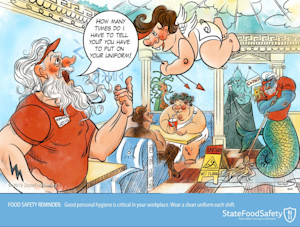
Clothing can carry bacteria, viruses and other hazards from outside environments. Wearing a clean uniform each shift helps reduce the risk of introducing pathogens into preparation areas. Employees should also bathe and maintain good grooming habits before arriving at work.
These simple practices support safe food handling and help maintain a professional appearance.
2. Wash Your Hands Frequently and Correctly
Proper handwashing is one of the most important food safety basics.
Hands can easily transfer harmful bacteria and viruses from contaminated surfaces, raw ingredients and personal items to other goods. Employees should frequently wash their hands thoroughly with soap and warm water for at least 20 seconds.
Workers should wash their hands before beginning work and after:
- Using the restroom
- Taking breaks
- Switching tasks
- Handling raw food
- Touching their face, hair or phone
- Cleaning activities
- Contacting any suspected contamination
Consistently washing hands helps prevent the spread of illness and protects both employees and customers.
3. Wear Gloves and Change Them Regularly
Gloves can provide an additional barrier against contamination, but they are not a substitute for proper handwashing.
Employees should always wash their hands before putting on gloves. While wearing gloves, workers should avoid touching hair, clothing, phones or other potentially contaminated surfaces. Gloves should be changed whenever they become damaged, between handling raw and ready-to-eat items or after prolonged use.
Many incidents occur because workers assume that gloves eliminate the need for good hygiene practices rather than enhance them.
4. Use Hair Restraints
Hair can create both physical and biological hazards. If a customer finds a strand in their dish, they are less likely to return to an establishment. Hair can also transfer bacteria into dishes.
Wearing a hair covering, like a hair net, cap or visor, keeps locks contained and out of prep areas. Even if a role doesn't require a formal hair restraint, pulling back hair — especially long hair — is still a smart practice to prevent it from falling or brushing against items during service.
5. Keep Fingernails Clean and Trimmed
Fingernails can trap dirt, grease and pathogens, making them a common source of contamination.
Employees should keep nails short, clean and well maintained. During handwashing, employees should pay special attention to cleaning underneath their fingernails.
Gloves should always be worn if an employee is wearing nail polish or artificial nails.
6. Limit Jewelry While Working
Jewelry can introduce both physical and biological hazards into dishes since bacteria can accumulate beneath rings, bracelets and watches. In addition, items of jewelry can accidentally fall into dishes.
For this reason, many establishments prohibit workers from wearing jewelry during shifts. In most cases, a plain metal wedding band is the only acceptable exception.
7. Avoid Eating, Drinking and Smoking in Preparation Areas
When employees eat, drink or smoke near prep areas, they increase the likelihood of introducing foreign contaminants.
These activities frequently bring hands into contact with the mouth and face, potentially transferring pathogens to items or contact surfaces. Employees should only eat, drink or smoke in designated break areas and always wash their hands afterward.
Safe Practices Beyond Personal Hygiene
While personal hygiene is critical, other food safety practices also play an important role.
Prevent Contamination
To prevent cross-contamination:
- Use separate cutting boards for raw and cooked items.
- Store raw meat below ready-to-eat products.
- Use separate utensils whenever possible.
- Sanitize equipment between tasks.
- Clean workstations regularly.
Careful preparation minimizes the number of ways harmful agents can enter the kitchen.
Monitor Temperatures Carefully
Temperature abuse is one of the leading causes of food poisoning.
Employees should:
- Cook to proper temperatures.
- Follow cold and hot holding guidelines.
- Refrigerate items promptly.
- Monitor refrigeration equipment regularly.
- Reheat leftovers to 165 degrees Fahrenheit (74 degrees Celsius).
Controlling temperature controls the conditions under which bacteria might grow.
Stay Home when Sick
Handlers who are experiencing symptoms of illness — particularly vomiting, diarrhea or jaundice — should call out. Many foodborne illness outbreaks start with a single symptomatic employee who continued working.
Managers should create clear, consequence-free policies that make it easy for staff to report illness without fear of losing wages or their positions.
Recognizing Signs of Spoilage
Handlers should know when items are no longer safe to serve.
Common signs of spoilage include:
- Unpleasant odors
- Changes in color
- Unusual texture
- Slimy surfaces
- Visible mold growth
- Sour or rancid smells
Any items showing these signs should be discarded immediately, regardless of the printed expiration date. When in doubt, throw it out.
Items containing harmful bacteria may not always show obvious signs of spoilage, which is why following established food safety guidelines is so important.
Regulatory Compliance and Ongoing Training
Regulations exist to protect public health. Compliance requires more than simply following rules during inspections.
Successful service operations invest in ongoing employee education and regular training updates. Continuous education helps workers stay informed about emerging pathogens, changing regulations and evolving sanitation practices.
Whether you work in a commercial kitchen or prepare meals at home, understanding food safety hygiene practices can help prevent illness, protect consumers and maintain confidence in the establishment.