
How to Use Color-Coded Cutting Boards in Your Kitchen
Written by Staff Writer

Cutting boards work hard in a restaurant kitchen. Before the first rush even starts, they may serve as a platform for prepping chopped herbs, sliced tomatoes, portioned fish, cooked meat, bread and cheese, just to name a few. But when the kitchen gets busy, improper use or sanitization can result in a serious food safety problem.
A color-coded cutting board system helps prevent accidents. Raw meat gets one color. Produce gets another. Each is tied to a specific food group, so staff can grab the right board at a glance instead of guessing or using whichever is closest.
Reasons to Use Color-Coded Cutting Boards
Separation and reduces the likelihood of cross-contamination. That’s the biggest benefit. Imagine a prep cook slicing raw chicken on a cutting board that is later used to chop lettuce. Even if it looks clean, poultry juices can leave behind harmful bacteria. If contaminated food isn’t later cooked to a temperature that’s high enough to kill the bacteria, guests can get sick.
A color chart helps prevent that kind of mistake by making food safety visible to kitchen workers. It supports HACCP-style procedures and gives managers an easier way to spot problems during a shift. A simple system that is easy to see and repeat also makes it simpler to train new employees.
Organization is another advantage to a color-coded system. During peak service, staff might not have to stop and ask which board they should use or wait for the surface to be cleaned and sanitized between every prep task. Instead, staff can move through prep tasks with greater speed and confidence.
Common Cutting Board Color Codes
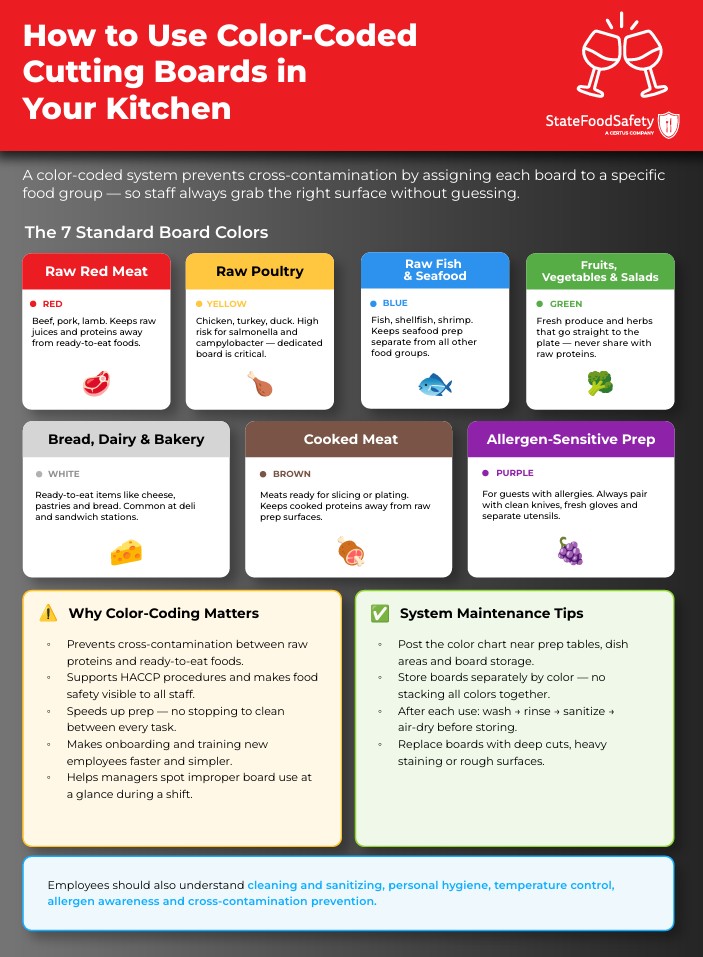
Each kitchen has its own rules and culture, but many food service teams use a version of the color guide below.
Red: Raw Red Meat
Red is commonly used for raw beef, pork, lamb and similar meats. Strict separation helps contain the raw juices, trim and proteins that should stay far away from ready-to-eat foods.
Yellow: Raw Poultry
Yellow is typically used for raw chicken, turkey, duck and other poultry. These high-risk ingredients need careful separation because raw poultry can carry bacteria such as salmonella and campylobacter. Having a dedicated surface specifically for these meats helps keep poultry prep contained, preventing the spread of bacteria throughout the kitchen.
Blue: Raw Fish and Seafood
Blue is usually set aside for raw fish, shellfish and other seafood. This gives staff a specific surface for tasks like portioning salmon, peeling shrimp, trimming fillets or preparing shellfish without mixing seafood prep with other foods.
Green: Fruits, Vegetables and Salads
Green is usually used for fresh produce and herbs. These foods often go straight to the plate, so they should never share a surface or tools with raw meat, poultry or seafood. A dedicated green board helps keep vegetables, fruits and herbs separate from higher-risk products.
White: Bread, Dairy and Bakery Prep
White is often used for prepared bread, cheese, pastries and other ready-to-eat items. You will often see them at deli counters, sandwich stations, bakery areas and cold prep lines.
Brown: Cooked Meat
This color is commonly used for cooked meats that are ready for slicing or plating. Cooked food still needs protection after it leaves the heat. A brown board keeps cooked proteins away from raw prep surfaces and anything else that could contaminate them.
Purple: Allergen-Sensitive Prep
Purple is often used for allergy-aware or allergen-free prep. They can help protect guests who need meals kept away from common allergens such as fish, dairy, eggs, wheat, soy, peanuts and tree nuts. The board alone is not enough, though. Staff still need to practice allergen awareness and use clean knives, fresh gloves and separate utensils to avoid cross-contamination.
Make the System Easy to Follow
Color coding works best when it is simple and consistent. Post a color chart where staff can see it, such as near prep tables, dish areas or board storage. Keep boards stored separately by color so employees do not have to dig through a stack during a rush. Hasty handling could spread contaminants and reduce the system’s effectiveness.
Boards also need regular attention. Replace any that have deep cuts, heavy staining or rough surfaces, as bacteria can hide in damaged areas. After each use, boards should be washed, rinsed, sanitized and air-dried before being put away.
Keep Food Safety Training Current
Color-coded boards can help keep your kitchen safer from cross-contamination, but it is only one part of a larger food safety strategy. Employees must also understand cleaning and sanitizing practices, personal hygiene, temperature control, allergen awareness and cross-contamination prevention.
To help your team build those skills, consider enrolling your staff in StateFoodSafety courses. Our training, including Food Handler Card and Food Manager Certification courses, gives employees practical guidance they can use every day to protect guests and keep the kitchen running safely.