

Complete Guide: How to Calibrate a Thermometer
Written by Staff Writer

Temperature control is one of the most important parts of kitchen safety and product quality. Whether you work in a restaurant, catering company, manufacturing plant or laboratory, accurate temperature readings protect customers, maintain consistency and help meet regulatory standards.
This guide explains what calibration is, why it matters, how to check different device types and when to repeat the process. It also covers tools used in a variety of settings, so you can choose the right method for your job.
What Is Thermometer Calibration?
Calibration is the process of checking a temperature measuring gauge’s accuracy and adjusting it so it gives correct readings. When you calibrate thermometers, you compare them against a known standard such as ice water or boiling water. If the reading is wrong, you adjust the dial or digital setting until it matches the correct level.
This process ensures you achieve proper temperatures when cooking, cooling or storing different kinds of consumables. Without calibration, a device may slowly lose its precision because of drops, vibration, grease buildup, repeated heating or simple wear over time. That drift may be small, but it can still create safety risks.
Many food safety codes require that tools be checked regularly. Inspectors often ask to see records showing that consistent calibration is part of the establishment’s standard operating procedures.
Why Calibration Matters
Kitchen safety rules depend on precise temperature control. Undercooked poultry may contain bacteria. Improper cooling can allow pathogens to grow. Frozen items stored above safe levels may spoil or lose quality.
Accurate temperature readings are essential for:
- Cooking meats safely
- Holding hot or cold goods
- Monitoring refrigeration units
- Verifying pasteurization
- Testing products during inspections
- Maintaining product quality in manufacturing
A device calibrated regularly protects public health and reduces waste. Even a digital model that seems fine may be off by several degrees. That difference can mean the gap between safe and unsafe ingredients.
Calibration also supports consistency. In large kitchens or production lines, multiple tools are used every day. If each one reads differently, results will be uneven. Frequent adjustments keep gauges aligned with the same standard.
Common Calibration Methods
Most commercial devices can be checked using three main methods. Each compares the probe against a known reference point.
Ice Point Method
The ice point method is simple and reliable.
Steps:
- Fill a container with crushed ice.
- Add cold water until it reaches the top of the ice.
- Let it sit briefly to create ice water at 32°F or 0°C.
- Insert a stem thermometer at least two inches into the water and wait 30 seconds for the reading. The reading should show 32°F.
- Adjust the dial if needed.
This method is recommended for bimetallic stemmed models and dial probes because they are designed to be adjusted easily.
Boiling Point Method
The boiling point method uses boiling water to test accuracy.
Steps:
- Bring water to a rolling boil.
- Insert the thermometer probe carefully without touching the pot.
- Wait 30 seconds.
- It should read 212°F at sea level.
Remember that water boils at different temperatures depending on altitude. The higher the elevation, the lower the boiling point. Always check the correct boiling point in your area before testing.
Dry Block Method
Laboratories and manufacturing plants often use dry block methods. A dry block calibrator holds metal inserts at exact temperatures. You place the probe in the block and compare readings to the known value.
These methods are used for digital models and research instruments that require high precision.
Types of Thermometers Used in Food Service
Different jobs require different measuring gauges. Understanding each one helps you choose the right calibration process.
Bimetallic Stemmed Models
A bimetallic stemmed thermometer has a metal probe with a dial display. They are durable and affordable, making them common in restaurants and cafeterias. They measure temperature through metal coil expansion.
Use the ice or boiling point method to calibrate. Make sure these tools are inserted at least two inches into the ingredients for accurate readings.
Digital Probe Devices
Digital probes use electronic sensors to determine temperature. They are faster and easier to read than dial versions. Many provide precise readings within seconds.
Some allow manual adjustment while others must be checked and replaced if inaccurate. Digital probes are common in catering operations, inspection work and quick service restaurants.
Thermocouple Gauges
Thermocouples calculate temperature using voltage differences between metals. They respond quickly and are used in commercial kitchens where speed matters. They are also common in industrial processing lines.
Calibration often uses dry block methods or manufacturer instructions.
Infrared Units
Infrared devices measure surface temperature without touching items. They are useful for checking grills, refrigeration coils or conveyor belts, but not internal product temperature.
These units are calibrated with reference surfaces or factory services.
Refrigerator and Freezer Tools
Cold storage devices monitor safe holding temperature. They may be dial or digital. They are checked with ice water methods or replaced if readings drift.
Thermometers Used in Manufacturing and Laboratories
Research facilities and production plants use more advanced equipment that requires careful calibration.
Research Temperature Detector (RTD) Tool
An RTD thermometer measures temperatures using resistance changes in metals. It provides very accurate readings and is common in dairy plants, breweries and quality control labs.
Platinum Resistance Thermometer (PRT)
A PRT is a type of RTD. These are used in research labs and inspection agencies because of their stability and precision.
Thermistor Sensors
Thermistors are electronic sensors with high sensitivity. They are used in research settings, food science experiments and some specialized processing equipment.
Data Logging Tools
These devices record temperature over time. They are used in transportation, storage monitoring and hazard analysis studies. Assessing their accuracy ensures long-term accuracy.
Choosing the Right Tool for the Job
Different workplaces need different temp tools. Choosing the right option depends on speed, precision, durability and cost. Using the wrong gauge may lead to false results or slow service.
How Often Should You Calibrate a Thermometer?
Food safety laws and inspection standards require that temperature-measuring devices be checked on a routine schedule. The exact frequency depends on how often the tool is used and how critical the measurement is.
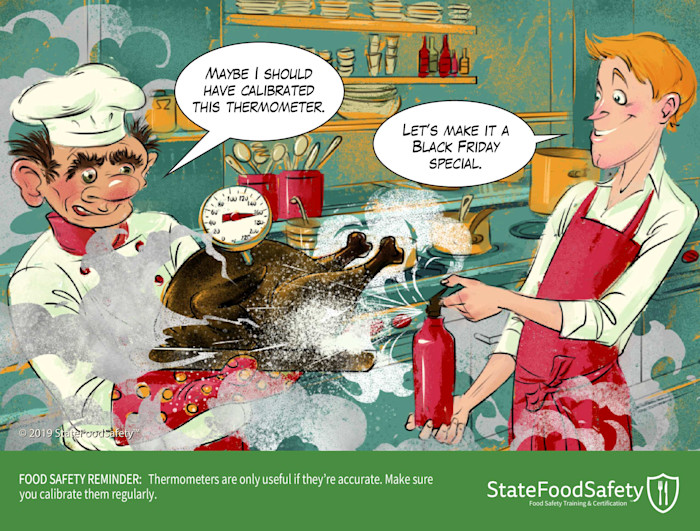
Calibrate gauges when:
- Dropped or bumped
- Exposed to extreme heat or cold
- Used for high-risk ingredients
- Readings seem off
- At least once per week in busy kitchens
Manufacturing plants may test daily or before each batch. Laboratories may verify precision before important experiments. Keeping written records helps demonstrate compliance during inspections.
How to Tell If a Device Is Broken
Signs of a broken temp meter include unstable readings, physical damage, cracked displays, corrosion or probes that do not respond. Calibrate and wait 30 seconds. If the reading does not stabilize or the dial cannot be adjusted, replace it immediately.
Using a faulty tool can create serious safety risks and may lead to violations during inspections.
Recordkeeping and Documentation
Keeping calibration records is important in regulated kitchens and production plants. Logs should include date, method used, results and adjustments made. Digital systems can track history and alert staff when a check is due. Documentation shows compliance with safety laws and protects businesses during audits.
Ensuring Reliable Temperature Measurement in Every Setting
Calibration is a simple process that protects customers, workers, supervisors and businesses. Whether you use a bimetallic stemmed tool in a restaurant, a digital device at home or a PRT in a lab, exact readings are essential to safety.
Testing devices regularly, choosing the right gauge and following proper methods ensure safe handling of ingredients and finished dishes. When measuring tools work correctly, everyone benefits from safer meals and consistent quality.