

Understanding Food Contamination: What Food Handlers Should Know and How to Prevent It
Written by Staff Writer

Contamination is one of the most significant challenges facing the food service industry. Whether you work in a restaurant, grocery store, processing facility or food truck, selling compromised items can have serious consequences, ranging from life-threatening illnesses to legal liabilities.
Food handlers have a duty to ensure that the meals they prepare, store and serve are safe for consumption. It starts with recognizing the factors that can affect the integrity of ingredients.
This guide breaks down everything you need to know about food contamination, including the various causes, possible health complications that may arise and the steps workers must take to safeguard customers and their businesses.
What Causes Food Contamination?
Contaminants can be introduced at any stage of the food supply chain — from production and processing to transportation, preparation and storage.
Food may be compromised when:
- Pesticides and harsh chemicals are not sufficiently removed during cleaning.
- Livestock infected with viruses are butchered alongside healthy animals.
- Harmful bacteria multiply because of improper temperature control.
- Foreign objects are introduced during preparation.
- Chemicals or pesticides contact food after cooking.
- Allergens transfer from one food item to another.
- Employees practice poor hygiene, fail to sanitize equipment and surfaces or mishandle raw foods.
Understanding these pathways is crucial to quality control. While some pathogens may already be present, they may be overlooked and even introduced to other foods during the handling process.
Each item must be inspected from the beginning of its journey to the point of service. Even a small mistake or oversight can endanger customers’ health, trigger allergic reactions or result in serious foodborne illnesses.
The Four Main Kinds of Contaminants
There are four main types of food contamination: chemical, microbial, physical and allergenic. Every food handler must recognize each one and take precautions to prevent customers from getting sick.
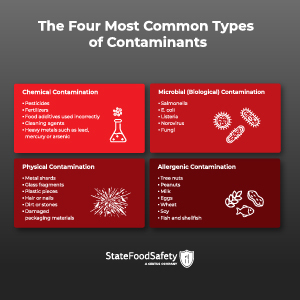
1. Chemical Contamination
This occurs when a chemical substance enters food. Examples include:
- Pesticide residue
- Fertilizers
- Food additives used incorrectly
- Cleaning agents
- Heavy metals such as lead, mercury or arsenic
To prevent this from happening, food handlers should label and store chemicals separately from goods and keep them in designated areas away from preparation surfaces. Chronic exposure to toxins can result in neurological damage, cancer, heart disease, organ failure or other long-term health issues. Acute exposure may cause poisoning, tissue irritation or chemical burns.
2. Microbial (Biological) Contamination
Biological contamination occurs when consumables are infected by living organisms such as bacteria, viruses, parasites or fungi.
Common examples include:
- Salmonella
- E. coli
- Listeria
- Norovirus
- Campylobacter
- Parasites found in raw or undercooked meat
These and other microorganisms can multiply inside food and grow rapidly under the right conditions — usually when food is held in the temperature danger zone, stored improperly or handled with unclean hands.
This can cause:
- Infections
- Intestinal illnesses
- Severe dehydration
- Organ failure
- Long-term diseases
Because microbes and similar biological contaminants are invisible to the naked eye and often already present in items sold in stores or used to make dishes, strict inspection, hygiene and sanitation practices are essential to minimize their proliferation.
Bacteria and viruses can easily infect food. Items like ground beef, unpasteurized milk and raw fruits often carry harmful bacteria. If not handled properly, these pathogens can spread to other foods, equipment or preparation areas.
3. Physical Contamination
Physical contamination occurs when a foreign object enters food. aIf this happens, the results are often immediate injury, including broken teeth, choking, cuts or internal organ damage.
Possible physical contaminants include:
- Metal shards
- Glass fragments
- Plastic pieces
- Hair or nails
- Dirt or stones
- Damaged packaging materials
Workers must examine ingredients thoroughly to ensure packaging is intact and report any issues related to broken seals immediately. Regular equipment maintenance also helps to avoid unnecessary particles from entering the food supply. Gloves should always be worn (and changed frequently, especially after touching raw items or allergens) as well as hairnets.
4. Allergenic Contamination
This occurs when an allergen transfers from one substance to another. It can happen even if the other item doesn’t typically contain a trigger ingredient.
Common allergens include:
- Tree nuts
- Peanuts
- Milk
- Eggs
- Wheat
- Soy
- Sesame
- Fish and shellfish
Allergic reactions can be severe or even fatal. To protect customers, staff must use separate equipment, accurately label foods, perform regular allergen testing and follow proper sanitation protocols.
Cross-Contamination: A Common Risk Factor Contributing to Health Emergencies
We’ve already explored the various ways in which harmful agents can be introduced into food. However, hazards can spread from these vectors to other items due to cross-contamination.
As the name suggests, cross-contamination happens when harmful microbes or bacteria transfer from one surface, food or piece of equipment to another. It is one of the most common causes of food poisoning and usually happens when:
- Raw meat touches ready-to-eat foods.
- Cutting boards are reused without cleaning.
- Food handlers fail to wash their hands.
- Contaminated equipment is used for multiple food types.
To prevent ingredients from becoming contaminated, workers should always put on a fresh pair of gloves, use separate tools for raw and cooked items and sanitize all equipment before and after handling a new product.
The Short- and Long-Term Effects of Selling Compromised Goods
The consequences of food contamination are far-reaching. The impacts can be costly, both financially and in terms of consumer health. Below are some of the potential effects.
For Consumers
Customers can experience several health complications after consuming tainted goods, such as:
- Foodborne illnesses
- Allergic reactions
- Chemical exposure
Consequences may range in severity from mild irritation to organ failure or death.
For Businesses
Companies can also suffer damage after selling food that has been compromised. These include:
- Damaged reputation
- Hefty fines
- Possible business closure
- Product recalls that hurt profitability
- Increased scrutiny from health inspectors
Globally, foodborne illnesses cost an estimated $95.2 billion annually in low- and middle-income countries alone. Incidents can disrupt the entire food chain, affecting food supply, public health and even national economies.
Outbreaks and Food Recalls
Impurities in consumer goods have led to some of the most significant illness outbreaks and recalls in history.
One of the most notorious events was the 2008–2009 Peanut Corporation of America salmonella outbreak, when contaminated peanut products caused over 700 illnesses across 46 states and nine deaths. This prompted one of the largest recalls of peanut butter and related products in U.S. history. Company officials eventually faced criminal convictions.
The Jack in the Box E. coli outbreak in the early 1990s was another deadly episode. It sickened more than 700 people and led to significant changes in food safety policies and cooking standards for ground beef.
In 2011, a listeria outbreak linked to cantaloupes from Jensen Farms resulted in 33 deaths and widespread recalls of hundreds of thousands of produce items, underscoring the devastating impact of biological contaminants on both public health and the commercial food chain.
More recent recalls, such as large batches of pasta linked to a deadly listeria strain and multi-million-pound recalls of shredded cheese and snack products due to the presence of metal fragments or salmonella, demonstrate that contamination issues continue to persist.
These outbreaks and recalls not only cause illness and tragic loss of life, but can cost companies hundreds of millions of dollars, trigger product withdrawals from shelves nationwide and reduce consumer confidence in food businesses and the safety of the food supply.
Best Practices for Food Handlers
Workers are the last line of defense in the food chain. Their daily practices play a key role in ensuring products are safe to eat. To prevent contamination of all kinds, anyone who prepares, stores or serves consumable goods should:
- Practice impeccable personal hygiene.
- Wash their hands thoroughly and frequently.
- Separate raw foods from ready-to-eat items.
- Cook ingredients to safe internal temperatures.
- Store products properly and rotate stock using the First In, First Out (FIFO) method.
- Keep chemicals and cleaning products away from food.
- Clean and sanitize prep areas.
- Conduct allergen testing when required.
- Inspect all items for spoilage, foreign objects or tampering.
- Document incidents and report hazards immediately.
Proper training equips handlers with the skills and knowledge to minimize the risk of item corruption.
Doing Your Part to Promote Safety in the Food and Beverage Industry
Food contamination is a serious, but preventable, hazard. By completing an educational course and following strict safety practices, workers can help maintain item integrity from the moment ingredients arrive to the point of purchase. Explore our training programs today to gain the tools you need to protect consumer health.