

Why You Should Always Use a Licensed Pest Control Service
Written by Staff Writer

No one likes seeing ants crawling in their kitchen or mice scurrying around their storeroom. And when pests like these are present in a bar, restaurant or other foodservice establishment, it isn’t only annoying, it’s dangerous.
Pests can be vectors for pathogens and spread viruses and bacteria to food and your customers. Additionally, a lack of pest control, like other food safety violations, can also damage your reputation and result in potential lawsuits.
As a business owner or manager, you’re constantly busy supervising employees, ensuring food quality and making sure that customers have great experiences time and time again. With all that on your plate, you don’t have the time — or the expertise — to properly take care of a pest infestation on your own.
That’s where licensed pest control operators come in.
Reasons to Use Licensed Pest Control Operators
There are several options you may consider for managing unwelcome pests: doing it yourself, using an unlicensed contractor or handyperson or, as we recommend, using a licensed pest management professional.
But why is it so important to use a licensed professional? It comes down to training, experience, access to specialty pest control chemicals, compliance and liability. In short, when pests are putting your staff, customers and reputation at risk, you want the job done correctly and quickly by a professional who knows what they’re doing.
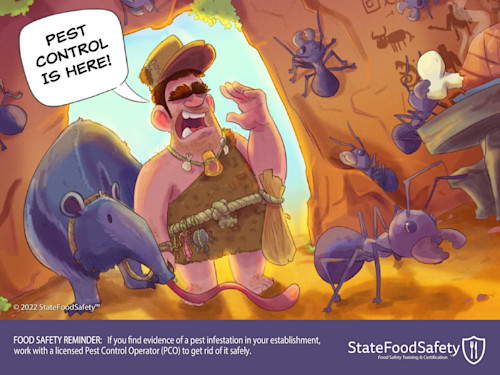
Pest Control License and Certification Training
One of the key reasons to use a licensed pest control company is because of their knowledge and expertise. Individuals and companies have to meet state-mandated licensing requirements. The licensing certification framework includes extensive training and examinations that cover pest identification, biology, behavior, safe pesticide handling, application techniques and environmental regulations.
In addition to this, many states’ license requirements mandate that pest control workers must have their own individual Certified Commercial Applicator or Pesticide Application Certification credentials. This is necessary even if the company they work for and their supervisor are also licensed.
Beyond just credentialing, experienced professionals are well-informed on new methods of pest management, the most effective products and current safety standards. This helps ensure that they provide the most effective service, and that your pest problems get resolved quickly and hopefully permanently.
Experience to Ensure Effective Pest Removal
Trying to deal with pests on your own may sound easy enough, and you’re probably thinking it could save you some money, too. But that couldn’t be further from the truth. If your attempts to remove pests are not effective, you could end up having a very long and expensive battle on your hands.
Working with a professional means they’ll be able to confidently identify infestations and remove pests quickly, safely and completely. This will help you avoid foodborne illness outbreaks and damage to food, property and your reputation. That’s an instant savings right there.
Additionally, it will allow you to save time and energy that you can dedicate to what you do best — managing the business and its operations — while the professionals take care of the pests. In fact, it’s probably more economical to let a professional handle pest removal than to even attempt to do so yourself. And regardless, it’s certainly far cheaper than risking being shut down for a health code violation.
Safe Application of Pesticides and Traps
Did you know that some pesticides can only be applied by someone who is certified to use them? These are called “restricted use pesticides," and are restricted based on their toxicity and the risks of adverse effects.
Licensed professionals are certified to fumigate structures and apply or supervise the application of deadly pesticides. And critically, they also have the knowledge and skills to do so without contaminating food or causing harm to people.
In addition, licensed professionals are trained to effectively use less toxic means of pest control to minimize environmental impact and chemical exposure. That means they understand proper dosage and safety protocols, which is much safer for customers and staff.
Traps can also be an effective means of lowering pest populations. However, you have to know how to use them, where they go, how many to use and how to maintain them. Licensed operators are highly experienced at setting up traps to maximize their effect. Additionally, they can teach you to properly clean and maintain traps to ensure continued functionality and prevent the spread of disease.
Lower Risk and Less Potential Liability
One of the major concerns you should have when it comes to pest control work is liability. If you attempt to take care of the problem yourself or use an unlicensed company or individual, the liability will fall squarely on your shoulders.
That means if the pest control solution doesn’t work or makes the problem worse, you’ll have no recourse. However, more critically, if the chemicals you use contaminate food or harm your staff or customers, you could be in for a serious lawsuit. If found liable, the penalties could be severe, ranging from civil fines of thousands or tens of thousands of dollars to even criminal charges.
When you work with a reputable licensed pest control company, they almost always carry comprehensive insurance, including general liability and workers' compensation. This ensures that you’re protected in case of property damage, injury to technicians, negligence or other incidents that might occur.
Prevent Pests with an Integrated Pest Management Plan
If you’ve dealt with pest infestations before, you know that they can be difficult to resolve. That’s why the best course of action is prevention, and that starts with integrated pest management.
Integrated pest management is an environmentally conscious approach to pest control that focuses on long-term prevention by using a combination of common-sense practices and less harmful pest control solutions.
Licensed professionals can help you develop an integrated pest management plan as an economical pest control solution that is less harmful to people, property and the environment.
When developing a plan, pest control professionals can answer your questions about how pests might affect your establishment. They can also help you determine how to secure entry points and remove pests’ access to food and shelter. That way, as long as you listen to their advice and follow best practices, you're less likely to need them to come back later to treat an infestation.
Pest Control Inspection Reports
A critical component of integrated pest management is keeping up-to-date compliance documentation, namely pest control inspection reports. These are often required by health departments when applying for or renewing your food service license, as well as during routine health inspections.
Licensed pest control operators are the only ones who can issue an inspection report providing documentation of infestations (or lack thereof), risk factors and treatment plans. Without a recent inspection report, health inspectors can issue fines or even shut you down immediately if they find evidence of a pest infestation.
What to Do if You Have Pests
If you see signs of pests in your establishment, or know for certain you have a problem, call a licensed provider immediately. The faster you can get them in there, the easier it will be for them to remedy the situation.
The last thing you want is a pest infestation that’s gotten out of control; those can be difficult and incredibly expensive to resolve. A severe infestation may even require closing your establishment for an extended period. Then, you need to spend money to get rid of the infestation while also losing revenue every day you’re closed.
If the pest management professional determines that they’ll need to use pesticides, you’ll need to do your part to limit chemical contamination and reinfestation. That means you should:
- Remove food and food-contact surfaces from the area.
- Use waterproof covers on food-contact surfaces and equipment that cannot be removed.
- Clean and sanitize equipment following pesticide treatment.
- Follow all recommendations they provide, as well as the treatment plan included in the inspection report.
- Develop and implement an integrated pest management plan.
Taking these steps will help make sure pest removal is effective and safe, and it lowers your risk of future pest problems.
Learn more about how to prevent pest infestations and deal with them if they occur — sign up for Food Manager Training and Certification developed by the experts at StateFoodSafety.