

What Is the Correct Order of Steps for Hand Washing?
Written by Staff Writer
Handwashing is one of the simplest ways to reduce the spread of germs, but it only works when you do it correctly. A quick rinse may make your hands look clean, but it can leave behind microorganisms that are too small to see.
That matters even more in food service, where hands come into contact with numerous ingredients, utensils, equipment and shared surfaces throughout a shift. If those hands are contaminated, harmful microorganisms can move directly to food or spread around the kitchen.
Proper handwashing helps break that chain. Knowing when to wash, where to wash and how to do it correctly gives you a simple but important way to protect customers and reduce the risk of foodborne illness.
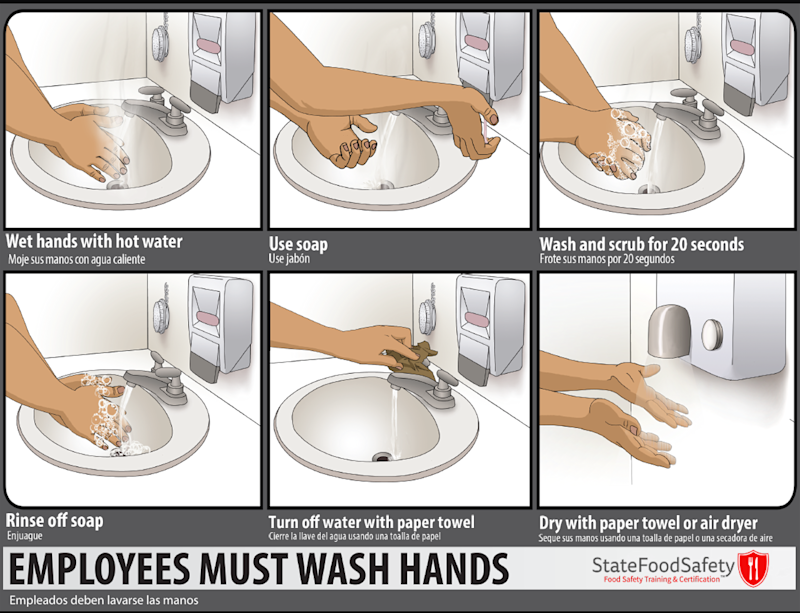
The Five Steps of Proper Handwashing
Proper handwashing follows five basic steps.
1. Wet Your Hands
Start by wetting your hands under clean, running water.
The U.S. Food and Drug Administration (FDA) Food Code states that warm water should be used. Food workers should always follow the exact handwashing requirements established by their local health department and establishment.
2. Apply Soap
Apply enough soap to spread over both hands. You don’t need to use antibacterial soap for routine handwashing. Regular soap and proper technique are enough to effectively remove germs from the skin.
3. Lather and Scrub
Rub your hands together to create a lather, then scrub thoroughly.
Pay close attention to areas that are easy to miss, including the backs of your hands, between your fingers, around your fingertips and under your fingernails.
The FDA Food Code says to scrub for at least 20 seconds, or roughly the time it takes to sing the “Happy Birthday” song to yourself twice. This includes vigorously rubbing your hands and exposed portions of your arms for at least 10 to 15 seconds before rinsing.
4. Rinse
Next, rinse thoroughly under clean, running water.
Rinsing carries away the soap along with dirt and germs loosened during scrubbing. Make sure you rinse thoroughly enough to remove soap from all areas of your hands.
5. Dry Completely
Dry thoroughly using an approved method, such as a clean disposable paper towel or hand dryer.
Drying is part of the process, as germs can transfer more easily to and from wet hands. In food establishments, employees should only use the hand-drying methods required by their workplace.
When Should You Wash Your Hands?
You should wash your hands whenever they may have picked up germs or contaminants.
Handwashing is especially important when changing tasks and after activities that could contaminate your skin. That includes:
- After using the restroom
- After coughing, sneezing, eating, drinking or touching your face or body
- After handling raw meat
- When switching from uncooked to ready-to-eat food
- After handling dirty utensils or equipment
- After handling garbage
- After handling money, receipts or mobile payment devices
- After using cleaning chemicals
- Before beginning food prep
You should also wash your hands before putting on clean single-use gloves. Gloves by themselves don’t replace proper handwashing practices.
Where Should Food Workers Wash Their Hands?
Anyone who handles food in a commercial facility should always wash their hands at a designated handwashing sink. A prep sink, dishwashing sink or utility sink should never be used as a substitute.
Handwashing stations should always be easy to access and stocked with the proper supplies, including soap and an approved way to dry hands.
After washing, avoid touching dirty surfaces that could contaminate your hands again. For example, a disposable paper towel can be used as a barrier when turning off a manual faucet or opening a restroom door to avoid contamination.
Can You Use Hand Sanitizer Instead?
No. When it comes to food safety, hand sanitizer should be treated as an extra step, not a replacement for washing with soap and water.
Under the FDA Food Code, a hand antiseptic may only be used after hands have been properly cleaned. Some products are designed to reduce microorganisms further than washing alone, but they don’t remove residue or debris from the skin.
You should also only use products that meet applicable food safety requirements and follow the product label. State and local rules may set additional requirements for when and how hand sanitizer can be used in a retail food establishment.
Make Proper Handwashing Easier to Remember
Good handwashing habits depend on consistency. Having clear reminders near sinks and utilizing food safety training can help employees follow the correct steps every time.
StateFoodSafety offers posters, training resources and food safety courses that can help reinforce proper hygiene in the workplace. Use these to keep handwashing procedures visible and give all employees the knowledge they need to keep themselves and customers safe.