

How to Cook Steak to the Right Temperature
Written by Staff Writer
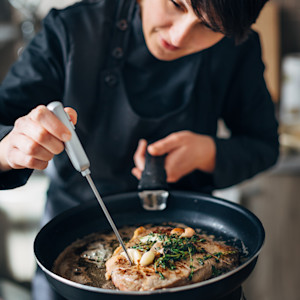
Cooking steak correctly takes more than watching the clock or checking the color. A thick sirloin or filet can look beautifully browned on the outside, but if you cut into it too soon, you may find it is rarer than you expected.
These cuts also allow for more personal preference than many other meats. One person may want a warm red center, while another wants only a little pink. That makes internal temperature the most reliable way to cook beef safely and achieve the finish you want.
What Is a Safe Temperature for Steak?
Guidelines from the U.S. Department of Agriculture (USDA) recommend cooking steak to an internal temperature of 145 degrees Fahrenheit, followed by a minimum resting period of at least three-minutes before serving.
That correlates to a medium-well to medium doneness. If you prefer yours to be cooked below this threshold, just be aware that lower internal temperature comes with greater food safety risk. Many people make that choice, especially with high-quality whole cuts. But it is important to know the difference between individual preference and the official safety recommendation.
Use a Food Thermometer
Color alone is not a reliable indicator of doneness. High heat might cause a steak to brown quickly on the outside while the center stays well below a safe internal temperature. The reverse is also possible. A cut cooked low and slow may look pale or gray throughout, even when it has reached the right internal reading.
Using a food thermometer removes the guesswork entirely and gives you a number you can trust, regardless of surface appearance. This helps you avoid two common problems: serving meat that is undercooked and possibly unsafe, or overcooking it because you waited too long.
Use an instant-read thermometer. For thick cuts, insert the probe into the center of the thickest part. For thinner cuts, slide it in from the side until the tip reaches the middle. Keep the thermometer away from bone or large pockets of fat or gristle, as those spots can heat differently and give you false readings.
If the cut is uneven, make sure to check the temperature multiple spots. A thick ribeye or top sirloin can cook faster on one side than the other, especially on a grill with hot spots.
Don’t rely on touch tests. They can be useful as rough estimates for experienced cooks, but they are not precise enough for effective food safety. The same goes for cutting into the meat to check the color. By the time you see the center, you may have already lost the juices and still not learned the exact temperature.
Steak Doneness Temperatures
Use these temperatures as a guide to approximate equivalents between internal temperatures and finishes.
- Blue or Extra Rare: 115 degrees Fahrenheit: Very cool red or bluish center with a very soft texture.
- Rare, 120 degrees Fahrenheit: Cool red center with a soft texture.
- Medium-rare, 130 degrees Fahrenheit: Warm red center with a tender bite.
- Medium, 140 degrees Fahrenheit: Warm pink center with a little more firmness.
- Medium-well, 150 degrees Fahrenheit: Slightly pink center with a firmer texture.
- Well-done, 160 degrees Fahrenheit and above: Little to no pink with a very firm bite.
Once you pull the steak from the heat, don’t cut into it right away. While it is resting, carryover cooking will continue, raising the internal temperature by roughly five to ten degrees Fahrenheit — more for a thick ribeye, less for a thinner cut.
To accurately hit your target doneness, pull the steak from the heat about five degrees cooler than desired and let it finish on the board. Three minutes is the USDA's minimum rest, but a longer rest of five to ten minutes gives the juices time to redistribute through the cut rather than running out when sliced open. Check the temperature once more after resting to confirm before serving.
How To Calibrate Your Thermometer
A thermometer is only useful if it reads correctly. Before cooking, make sure it is properly calibrated using a glass of fresh ice water. This quick check is worth doing every time, especially if the thermometer is new, has been dropped recently or was stored in a crowded drawer.
Place the thermometer probe in the water without touching the sides or bottom of the glass. It should read 32 degrees Fahrenheit.
If it does not, adjust it according to the manufacturer’s directions. If your thermometer can’t be calibrated and the reading is off, replace it.
The Difference Between Undercooked Ground Beef and Steak
Rare or medium-rare steak is not the same as rare or medium-rare ground beef.
With whole cuts of beef, bacteria are usually found on the surface. A strong sear on a grill or pan is usually enough to kill surface bacteria. That’s why many people feel comfortable eating steak at temperatures lower than 145 degrees Fahrenheit.
Ground beef is handled differently. When beef is ground, bacteria from the surface can spread throughout the meat. That’s why ground beef should always be cooked to a higher temperature of 160 degrees Fahrenheit. In other words, a burger calls for a higher internal temperature than a whole steak, because the risk is inside the patty, not only on the surface.
If you are cooking for someone at higher risk for foodborne illness, such as a young child, older adult, pregnant person or someone with a weakened immune system, choose the safer temperature.
Safe Storage Practices
Once cooked, meat shouldn’t sit out all afternoon. You should refrigerate any leftovers within two hours. If food is outside or in a hot car, and the temperature is above 90 degrees Fahrenheit, refrigerate it within one hour.
Store leftovers in a clean, covered container. Sliced meat cools faster than a thick whole cut, but both should go into the refrigerator promptly.
If food has been left out too long, throw it away. Reheating doesn’t make it safe if bacteria have already had enough time to multiply.
How to Defrost and Marinate Safely
The safest way to thaw frozen beef is by placing it in the refrigerator overnight. This requires more advanced planning, but it keeps meat at a safe temperature throughout the defrosting process.
For a faster method, keep the meat sealed in a leakproof package and thaw it in cold water. Change the water every 30 minutes, then cook as soon as possible once it is thawed.
Marinating beef adds flavor, but it doesn’t make it safe to leave uncooked food out on the counter.
Keep steak in the refrigerator while it marinates. Cold temperatures at 40 degrees Fahrenheit or below slow bacterial growth.
If you want to use marinade as a sauce, set some aside before it touches raw meat. Marinade that has held raw meat should be discarded, or at least boiled, before it contacts cooked food.
Make Safe Steak That Still Tastes Great
You don’t necessarily have to choose between safe steak and good steak. If you cook cuts to rare or medium-rare, just understand the added risk and be extra careful with handling, storage and cleanliness.
Whether you prepare food at home, serve customers or manage a team, food safety knowledge matters. StateFoodSafety offers state-approved online Food Handler and Food Manager Certification courses designed to help you follow safe food handling practices every time you are in the kitchen. View our course catalog today and find training that works for you and your goals.