

The Ultimate Cleaning Guide for Restaurants (with Free Downloadable Checklist)
Written by Staff Writer

Keeping a restaurant clean is not just about appearances — it’s about food safety, customer trust, regulatory compliance and long-term business success. From spotless food prep areas to well-maintained dining rooms, cleanliness affects every part of your restaurant’s operations.
This guide breaks down how to keep a restaurant consistently clean by incorporating pre-set sanitation schedules. Plus, learn how a well-designed cleanup checklist can help your team stay organized and inspection-ready.
>> Get your free cleaning checklist now
Whether you manage a small cafe or a full-service operation, implementing a structured cleaning routine is one of the most effective ways to protect your customers, staff and reputation. Below are a few tips to help you get started.
Why Restaurant Cleanliness Matters More Than Ever
A clean restaurant creates a safe environment for food preparation and a welcoming space for guests. Health inspectors evaluate sanitation during routine inspections, and even one overlooked issue can result in citations, fines or temporary closure. Beyond compliance, customers notice cleanliness immediately. Dirty linens and floors, sticky tables or poorly maintained restrooms can lead to negative reviews and lost business.
Maintaining high standards also reduces the risk of foodborne illnesses by eliminating bacteria, viruses and pests that thrive in unclean environments. Scheduled cleaning stops debris and dirt build-up before it becomes a food safety risk, helping your restaurant stay proactive instead of reactive.
What Are the Benefits of a Cleaning Checklist?
A restaurant cleaning checklist is a useful tool that outlines what needs to be tidied up, how often and who is responsible for it. It usually includes a schedule and detailed procedures for cleaning equipment, utensils, plates and other materials, like tablecloths and furniture.
Having a structured cleaning protocol in place transforms tedious tasks from vague expectations into clear, manageable action items.
Using a checklist helps:
- Identify gaps and ensure no task is overlooked
- Assign tasks by shift
- Create accountability among staff
- Standardize dusting, sweeping, sanitizing and cleaning across shifts
- Align daily operations with local health codes
- Track completion of tasks
- Prevent last-minute, rushed or subpar cleanings
A clear to-do list also supports staff training. It shows new hires exactly what your expectations are for creating and maintaining a clean work environment.
How Do You Determine Cleaning Schedules for Kitchen Equipment?
Cleaning schedules are not random. They are based on:
- How frequently equipment is used
- The type of food being prepared
- Health department guidelines
- Manufacturer recommendations
High-risk items like food contact surfaces require frequent attention, while larger equipment may need weekly or monthly deep cleaning. Tools and machinery that operate at high heat or handle raw foods, allergens or time- or temperature-sensitive ingredients must be cleaned and sanitized more often. This is crucial for preventing bacterial growth and cross-contamination.
For example, grills and fryers used continuously throughout the day accumulate grease quickly, increasing the risk of fire if they aren’t cleaned and maintained regularly. Refrigeration units must be monitored daily to ensure proper food storage temperatures, while ventilation systems may require professional servicing.
Specialty Equipment That Requires Extra Care
Certain equipment requires specialized care, including:
- Ice machines — interiors must be emptied, cleaned and sanitized regularly
- Soda guns — must be dismantled and cleaned frequently
- Floor drains — require routine sanitation to prevent buildup
Ignoring these areas can lead to contamination and failed inspections.
How to Keep a Restaurant Clean Every Day
Consistency is the key to restaurant cleanliness. Instead of relying on occasional deep cleaning, successful operations focus on daily habits supported by weekly and monthly routines.
Daily Cleaning Tasks: The Foundation of Food Safety
Everyday assignments are designed to eliminate immediate contamination risks and maintain order throughout service. These tasks typically include:
- Disinfecting food prep areas after each use
- Washing and sanitizing cutting boards between food types
- Wiping down cooking equipment
- Sweeping and mopping floors
- Vacuuming carpets
- Emptying trash cans before they overflow
High-touch items such as door handles, POS screens and condiment containers should receive frequent attention throughout the day.
Back-of-House Responsibilities: Cleanliness Behind the Scenes
The kitchen is the heart of any restaurant and the most critical area for sanitation. Back-of-house (BOH) teams must follow strict cleaning processes to prevent cross-contamination and pest issues.
Key BOH Tasks Include:
- Cleaning and sanitizing all food prep equipment
- Degreasing cooking surfaces
- Sweeping and mopping kitchen floors
- Emptying drip trays and washing removable components
- Sanitizing floor drains to reduce odor and bacterial buildup
Color-coded tools and cloths help staff avoid spreading contaminants between raw and ready-to-eat zones.
Front-of-House Cleaning: First Impressions Matter
Guests may never see your kitchen, but they will always notice the dining room. Cleanliness in public areas directly impacts customer satisfaction.
Front-of-house (FOH) cleaning focuses on:
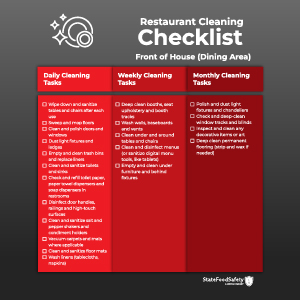
- Wiping tables and chairs between guests
- Cleaning menus and condiment dispensers
- Washing windows and glass doors
- Maintaining spotless restrooms stocked with toilet paper and paper towels
- Emptying trash bins regularly
A spotless restaurant creates a sense of trust, encouraging guests to return and recommend your business.
Weekly Cleaning Tasks: Going Beyond the Surface
Weekly tasks target areas that don’t require daily attention but still affect safety and sanitation.
These may include:
- Washing walls and baseboards
- Cleaning coffee makers and beverage stations
- Removing grease buildup from hard-to-reach areas
- Scrubbing floor mats and storage shelves
Regular weekly maintenance prevents small issues from turning into violations during inspections.
Monthly Tasks and Deep Cleaning
Monthly protocols focus on long-term maintenance and equipment efficiency. This is when restaurants often schedule deep cleaning sessions.
Examples include:
- Cleaning grease traps
- Inspecting and cleaning commercial kitchen equipment exteriors
- Dusting and cleaning light fixtures
- Organizing storage areas and rotating inventory
It’s not uncommon for establishments to hire a professional cleaning service for these tasks, particularly for complex areas like ventilation hoods and hard-to-access systems.
Cleaning Supplies Every Restaurant Needs
The right supplies make sanitation easier and more effective.
Essential items include:
- Food-safe sanitizing solution
- Degreasers designed for kitchen environments
- Color-coded cloths and brushes
- Approved chemicals for disinfecting toilets
Staff should be trained on proper chemical usage to avoid contamination and injuries.
Proper Food Storage and Temperature Control: Why This Matters
Cleanliness extends to how food is stored. Health inspectors pay close attention to refrigerators, freezers and dry storage areas.
Best practices include:
- Keeping food below 40°F to limit bacterial growth
- Storing raw items below ready-to-eat products
- Labeling and dating all items
A well-organized storage area supports food safety and speeds up cleaning routines. Foods kept below their recommended temperature can spoil quickly, becoming a breeding ground for mold and other pathogens that can easily infect other items.
Pest Prevention Protocols
Pests are attracted to food scraps, standing water and clutter. Regular cleaning reduces the risks of insects and vermin, but it takes strict sanitation practices and vigilance to keep critters at bay.
Preventive steps include:
- Sealing entry points
- Using pest traps where appropriate
- Keeping trash cans clean and covered
Health departments consider pest activity a serious violation, making prevention essential. Facilities often incorporate pest control and insecticide solutions as part of their monthly cleaning routine. However, many of these solutions use harsh chemicals that can contaminate surfaces and food.
When pesticides are needed to prevent or address a problem with insects or rodents, always hire a licensed professional to apply them. Licensed experts will only use pesticides safe for commercial kitchens. They will apply them in accordance with the law and will ensure food prep areas are not contaminated.
Waste Management and Clean Disposal Areas
Trash management is often overlooked, but it plays a critical role in maintaining sanitation.
Best practices include:
- Emptying trash bins before they overflow
- Cleaning disposal areas daily
- Removing food waste promptly
Neglected waste areas contribute to odors, pests and health violations.
Health Inspections and Compliance
Health inspectors may visit one or more times per year — or anytime a complaint is filed. During inspections, they evaluate:
- Food storage practices
- Cleanliness of preparation areas
- Employee hygiene
- Cleaning logs
Overall facility sanitation (restrooms, waste disposal areas and more)
Inspectors view cleanliness as a core indicator of food safety. They don’t just look for visible dirt — they assess whether cleaning procedures are systematic, documented and followed consistently by staff. Failure to maintain proper cleaning routines can result in violations, fines or even temporary closures.
Repeated violations related to sanitation can put a restaurant on a higher inspection frequency, increasing stress for staff and management. In severe cases, ongoing sanitation issues can lead to license suspension or permanent closure.
Designing your cleaning protocols around health department guidelines helps ensure your restaurant remains inspection-ready.
Creating a Culture of Cleanliness
Cleanliness should be part of daily operations, not an afterthought. Assigning specific responsibilities, conducting routine checks and using to-do lists create consistency across all shifts.
A clean restaurant creates:
- Safer food handling conditions
- Better inspection outcomes
- Happier customers
It also extends the lifespan of equipment and reduces costly repairs.
The Role of Staff Training
A restaurant can have the most detailed cleaning checklist in the world, but without proper food handler training, even the best systems will fail.
Cleanliness in foodservice is not just about knowing what to clean — it’s about understanding why cleaning matters and how improper practices can directly lead to foodborne illnesses, failed inspections and harm to customers or your reputation.
How Food Handlers Contribute to Safer Kitchens
Food handlers are on the front lines of food safety. Their daily actions determine whether bacteria are controlled or allowed to spread. Training gives staff the knowledge and confidence to follow cleaning procedures consistently.
It’s important not to cut corners during busy shifts. When workers understand how contamination happens, they are far more likely to take cleaning tasks seriously instead of viewing them as optional or secondary.
Effective training explains the connection between cleaning, sanitizing and food safety outcomes. Training should reinforce the importance of following cleaning schedules exactly as written, since skipping even one task can create a ripple effect throughout the restaurant.
Teaching Employees to Clean the Right Way
Training should be ongoing, not a one-time event during onboarding. New hires should receive clear instructions on cleaning procedures before they begin working with food. This includes demonstrations on how to properly clean and sanitize surfaces, use cleaning chemicals safely and follow color-coded systems for cloths and cutting boards.
Refresher training is equally important. Over time, employees may develop bad habits or forget details of proper procedures. Regular training sessions reinforce expectations and provide opportunities to correct mistakes before they become serious problems.
Managers should also ensure that staff understand the difference between cleaning and sanitizing. Cleaning removes visible dirt and debris, while sanitizing reduces harmful microorganisms to safe levels. Both steps are required to maintain food safety. Skipping sanitizing steps is a common mistake that can lead to contamination even when surfaces appear clean.
Take Action to Keep Your Establishment Spick and Span
The most successful restaurants don’t rely on memory or rushed end-of-day cleanups. They use structured cleaning schedules, train staff thoroughly and review their systems regularly.
By implementing a comprehensive checklist and reinforcing expectations daily, you create an environment where cleanliness supports food safety, compliance and an outstanding dining experience.