

A Practical Guide to Restaurant Crisis Management
Written by Staff Writer

Owning or running a restaurant is a dream for many, but it’s a dream that can quickly turn into a nightmare when problems occur. While most common problems are manageable — bad reviews, unreliable employees, missed supply orders — some issues can be very serious. You need to be prepared to effectively deal with threats like foodborne illness outbreaks, fires, viral social media misinformation or even natural disasters.
You need a crisis management plan.
A crisis management plan helps reduce the impact of unforeseen events and ensures you’re prepared with a coordinated, efficient crisis response that protects staff, customers and your restaurant’s reputation.
Restaurant Industry Crises: Challenges You May Face
When it comes to running a food service or hospitality business, not all crises are the same. Responding to a foodborne illness outbreak is vastly different from dealing with a kitchen fire. Though it’s impossible to prepare for every worst-case scenario, you must at least know how to handle the most common crises that restaurants face.
These include:
- Food safety events — Foodborne illnesses, cross-contamination, recalled food products and improper temperature control
- Alcohol service incidents — Over-service, disruptive or aggressive guests, staff drinking on the job and underage sales
- Reputational damage — Bad press, negative social media posts, misinformation spread by former employees and valid negative reviews
- Operational disruptions — Equipment failure, power outages, supplier issues and key staff resignations
- External threats — Natural disasters, fires, flooding and public health and safety emergencies
- Legal or regulatory issues — Failed inspections, citations and lawsuits
These are the types of scenarios where having a plan is a great asset — and can be the difference between an effective response and a prolonged and worsening crisis.
Creating a Crisis Management and Emergency Plan
A crisis plan is a set of written procedures you and your team should follow when something goes very wrong. You might think you and your staff know what to do in an emergency. But when a crisis hits, people panic. Having a concrete plan brings order to a chaotic situation and keeps your restaurant’s response consistent, regardless of who’s on duty.
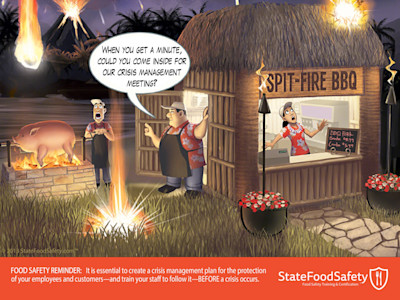
Your crisis management plan should cover:
- The roles and responsibilities of each team member.
- A communication plan for who to contact, and when.
- Approved messaging to use when notifying staff, customers and vendors.
- Public messaging plans for traditional and social media.
- Step-by-step response protocols for the most likely scenarios.
- A list of emergency contacts that includes:
- Emergency services.
- Non-emergency response departments.
- The owner, general manager and head chef.
- Your landlord.
- Utility providers.
- The local health department.
- Poison control.
- Your restaurant’s lawyer.
By having this information written down, you and your staff will know exactly what to do during a crisis. When writing a plan, be direct, clear and specific. That way it’s easy to quickly understand what needs to be done.
Forming a Crisis Management Team
A crisis management team can help you deal with a situation quickly and effectively. The core of your crisis team should be made up of the owner or general manager, the head chef or kitchen manager and the front-of-house manager. If you operate a franchise or multiple locations, you may also want to include the head of marketing or PR and, if you have one, a legal advisor.
Each person needs a clearly defined role so no one is left waiting to be told what to do during an emergency.
Conducting a Risk Assessment
Understanding your risks is essential to crisis planning. To figure this out, you should perform an assessment of your restaurant, identify the most likely crises you might face and consider how each would affect your reputation and operations.
You and your crisis team should analyze each part of your restaurant and aspect of your business. For each item, ask: What could go wrong here? How likely is that scenario? What would the impact be?
In addition to looking at physical operations and business health, don’t overlook social media. It’s important to be aware of the risks associated with controversial or inappropriate statements posted by owners and management, even if their profiles are private.
Once you’ve identified your highest-risk scenarios, you can build specific response protocols for each one.
Keeping Your Plan Accessible and Up to Date
Your crisis management plan is only useful if your team can find it and it’s up to date. You should review and update your plan at least once per year and store a physical copy somewhere everyone can remember.
Also keep a digital copy online and share it with every manager and member of your crisis management team. With full access to physical and digital versions of your plan your team will always be prepared, even if a crisis happens during a shift or in the middle of the night.
Crisis Management Protocols: What to Do When a Crisis Hits
Decisive, effective action can be the difference between quick recovery and serious consequences. The early decisions you make can shape how the whole situation unfolds. You and your team should practice crisis protocols in advance. Should a crisis happen, nobody should be trying to figure out what to do for the first time.
Put Safety First
If there’s an immediate threat, such as a fire, a gas leak, severe weather or a public safety incident, get people to a safe location as quickly as possible.
Once everyone is safe and the situation is under control, you should document what happened, when it happened and who was involved. Information like this can help you improve future responses and may also be necessary for insurance or legal claims.
Gather Information Before Responding
During a crisis, people often want to act quickly. But untrained individuals often act without seeing the full picture.
Gather the facts before issuing any statement to your employees, the press or social media. Once you have all the relevant information, you’ll be able to respond in a way that is accurate and appropriate for the situation.
Implement Your Crisis Communication Plan
After you fully understand what happened and why, that’s when the crisis communication portion of your plan comes into play. First, you should notify your staff and reach out directly to anyone affected by the situation. Depending on whether the crisis affects your community or guests, you may then want to issue a public statement.
Knowing who to inform and what to say ahead of time is the difference between a coordinated restaurant crisis response and miscommunication that could make things worse.
To communicate effectively during a crisis:
- Acknowledge the situation.
- Be factual.
- Express concern for anyone affected.
- Describe the steps you’re taking.
- Avoid speculation, blame or over-explanation.
Taking this approach keeps your message credible and makes it easier to rebuild trust once the crisis is over.
Social Media and Restaurant Crisis Communications
Social media is both a blessing and a curse for restaurant crisis management. As mentioned, reckless use can cause a crisis. An inappropriate or controversial post can quickly go viral and harm your reputation. But social media can also be a highly effective tool for managing a situation, as it gives you a way to communicate directly with your customers and other stakeholders.
Monitor your restaurant’s social media accounts during a crisis. Thoughtfully and professionally address situations that affect key audiences.
Keep your responses concise, factual and empathetic. Avoid blaming other parties or getting into debates. Additionally, you should never delete legitimate complaints. It’s better to show empathy and offer to make a situation right. A free meal or a refund may be great, but an honest apology will often suffice.
Training Your Team
While having a restaurant crisis guide is essential, planning doesn’t do much good if you don’t train your staff for restaurant emergencies. That’s why you should schedule regular training that walks staff through the most likely crisis scenarios and what to do if they occur. Make sure you also provide this training to new employees on day one.
Rebuilding Trust After a Crisis
Getting through a crisis can be challenging. But getting restaurant operations back to normal and rebuilding trust with customers and staff is perhaps even more difficult.
Doing so requires honesty, reflection, communication and adaptability. And, even if you did everything according to plan, there are likely opportunities to better prepare for possible future crises.
When recovering from a crisis:
- Assess damage — Examine what was affected, including your operations, reputation, finances and employee morale; these all may have sustained damage.
- Communicate changes you’ve made — In most situations, customers and staff need to see that a crisis resulted in genuine corrective action.
- Conduct a post-crisis review — Hold an honest debrief with your crisis management team. Discuss what worked, what didn’t, early warning signs you missed and what you could have done differently.
- Revise your plan — Use insights from what you learned and the conversations you had to update crisis management strategies in your plan.
Nobody wants to deal with a crisis. But every crisis you work through is an opportunity to make your plan and your team stronger.
Make Food Safety and Alcohol Service Training Integral to Crisis Preparedness
While some crises are difficult to prepare for or impossible to prevent, the right training can prevent many crises entirely.
By making sure your staff complete accredited Food Handler Training, Food Manager Certification and Alcohol Seller-Server Training, you can be confident that they have the knowledge needed to prepare food and serve guests safely. Whether you’re onboarding new hires or reminding veteran staff of best practices, training your team is the easiest way to head off preventable crises.